Columbus's Best Bat Removal
We've been voted Columbus's best bat removal company the past two years!
Get in touch
Bat Experts
Rapid Response
Trained & Educated
Licensed & Certified
About Columbus Bat Removal
Welcome to columbusbat.com. We are the only qualified bat removal company in Columbus, Ohio. Hearing the tell-tale sounds coming from your attic or loft space can be a horrible indication that you may have pest animals in your property, with scratching and movement noises being the most common. While they can be caused by a variety of species, bats are one of the animals that can find their way into domestic and commercial properties, and once there they can certainly become a nuisance. Finding a reliable local company to help you deal with these problems is vital, and we have received the award for the city's best animal removal company for three years in a row! We treat every customer as we would want to be dealt with ourselves, from our friendly telephone team who can provide reassurance and useful information, through to our technicians who can be onsite within 24 hours. We ensure all of our technicians stay up to date with the latest qualifications, and attend industry events where they can share and learn the latest practices and techniques. When it comes to dealing with a bat problem however, we have plenty of experience in this area and have a very good approach that can deal with your problem efficiently, without harming a single animal. Exclusion involves taking the time to really examine the attic or loft space to find even the smallest holes the bats are using to get in and out. The exclusion netting we use is fitted so that it then allows the bats out, but prevents them from getting back in, so they then have to find a new nesting spot. We operate 24-7-365, so don't hesitate to call us at 380-213-1912 to discuss your bat problem and schedule a fast appointment.
Residential
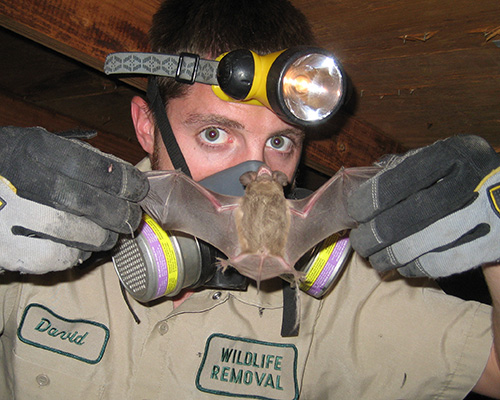
We are experts at removing bats from residential properties. Whether you have a single bat trapped in your house, a colony roosting in your attic, and/or various other problems, there is no need to worry! During our removal process, we make sure to inspect your entire home carefully, tracking down all the entrypoints bats are using to invade your place. Next, we perform a process called live exclusion (where no bats are harmed and all exit your property), then seal all entry holes completely shut. We also take care of the cleanup process after, so your home is safe and clean!
Learn MoreCommercial
Besides residential areas, we also have a wealth of experience removing bats from commercial properties! We begin by investigating the area for possible bat entrances, covering holes even as small as 1/4 of an inch. Through our live exclusion process, bats leave the building through one-way exits, and we seal up every hole afterward. Once the bats have been removed, we perform a cleanup process. This includes dealing with guano, replacing damaged insulation, and decontaminating the place.
Learn More
Contact us for bat removal today!
What Our Customers Say
I had a bat flying around in my house at 9pm, and CITY bat removal came right out and caught it in a net.
Sarah Lakewood
I had an annoying colony of bats stuck in my attic for a while before I finally decided to call for help. They were able to quickly and thoroughly solve the problem!
Brandon Chung
They did a great job clearing my attic of bats and didn't hurt any of the creatures.
Charlotte Demers
The technicians at CITY Bat Removal are skilled, professional, and know exactly what they're doing. Would highly recommend.
Mark O'Connor
My house stank of bats and their guano inside my wall. CITY Bat Removal not only removed the bats, they also got rid of the smell!
Alexis Ramirez
.jpg)
Bat Odor: Causes and How to Remove the Smell
In many ways, all animals are the cause of terrible odors. Bats are no exception, although the source of their particular brand of funk could be surprising. Without a doubt, their urine causes the most problems with smell. There is also staining and an odor that comes from the oil on their skin. Even after removing all the bats from your home, the odor can linger and cause other bats, or even the same bats, to return to roost again.
Bat Droppings
Bat urine is full of uric acid. This is a particular corrosive chemical that can cause many problems for the structures that it accumulates on. Wood can deteriorate, metal can rust, and porous surfaces will be etched permanently. It is also a wonderful location for insects to nest as they like that environment. Bat droppings, also known as guano, only increase the attraction of insects and other pest species. It carries a fungus that can cause a severe lung disease in humans if inhaled called histoplasmosis. It is important to cover your skin and handle any droppings with caution and protection.
Oily Skin
One thing that allows bats to continue having the ability to fly is keeping their wing membranes oiled. Their body has a tiny sack that produces oil from their chest and by rubbing against a surface while entering and exiting the roost they can spread the oil across their bodies. The oil itself may not have a strong odor but provides an attractant for various other animals. This oil can also cause stains on the surface it comes in contact with. The longer the bats infest an area, the more likely those stains will spread and darken from use.
Find the Source
One of the biggest problems in dealing with bat odor is finding the source and cleaning the area thoroughly. By focusing on where the bats were roosting, you can start dealing with the problem yourself. If it is small enough, you may complete the cleanup process by only having to purchase supplies. It is highly recommended that you contact professional services for bigger messes.
Cleaning Costs
Some methods of DIY cleaning and deodorizing include purchasing an enzyme cleaner which will breakdown the source of the odor on a molecular level when it has permeated the structure. Most professionals will have the equipment to permeate areas that are difficult to clean, such as chimneys and walls. By taking a DIY approach you risk not eliminating all potential sources of odor from a previous bat colony. This can be the cause of returning bat populations, increases in pest species infestation, and potential respiratory health issues.
Caution & Safety
Although many professional services will provide some advice, the biggest help is being properly prepared with safety equipment. Do not touch the droppings or bats themselves bare-handed. Doing so can risk the potential for a transfer of a disease or a pest infestation. Put on gloves and a mask that covers your nose and mouth when dealing with their droppings. You should also wear a protective suit that covers any other open skin and wear goggles over your eyes. Taking these precautions can ensure your health and safety while dealing with the sources of bat odors.
Clean Up the Mess
The standard procedure for cleanup after a bat colony has been excluded or removed is the same for DIY endeavors and professionals. On a mist setting, spray water or a combination of hydrogen peroxide and ammonia over the area of droppings. This dampness will help prevent the spores of fungus to become airborne and cause health issues.
Using a shop vacuum, if you have one, or a short-handled broom with a dustpan, remove all the large debris you can. Be sure to throw away the broom with the droppings as it could potentially have collected those spores and release them when dry.
Once this is done, professionals choose one of a handful of methods to break down the soaked-in urine and oils. One is to utilize an enzyme cleaner in an aerosolizing machine that will permeate the walls and hard-to-reach areas. Another is to use a misting spray bottle with the same type of cleaner to achieve the same results. There are benefits and detriments to both methods. Your choice could come down to how expensive is it to do yourself.